
French investment bank BNP Paribas said India's earnings growth potential is around 14-15 per cent

Average salary has grown faster than average business income for three of the last five years. This has implications in a country like India. Most people in India are self-employed, with 51.4% of the population falling in that bracket.

The government's move to sell enemy shares comes when it is struggling to meet its target of raising Rs 800 billion from the sale of State assets in the fiscal year ending in March 2019. The Custodian of Enemy Property of India holds around Rs 3,000 crore worth of equity shares besides land and property across India.

41 listed firms made 73 donations to gaushalas (cow shelters) and other cow-related charities over the last four years. The donations range from a few thousand rupees to a million.

His portfolio was worth Rs 12,333 crore at the end of June 2018. It was worth Rs 10,633 crore at the end of the September quarter. Smallcaps account for the largest number of his stock-picks. Such a fall has now happened for the third quarter in a row.

Audit firms such as KPMG believe zero complaints may be an indicator of the lack of requisite mechanism to allow for such reporting

'There is a huge tax differential of 15% to 20% depending on income classification.'
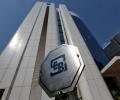
The top three companies in terms of the largest value of physical shares showed over 30 per cent shares are held in physical form. Two of the top three were part of the S&P BSE Sensex and the Nifty50 indices.

ONGC, Hindustan Petroleum, Bharat Petroleum, Indian Oil and Oil India listed the spending as part of their mandatory CSR commitment, but CAG noted that the Sardar Patel statue did not qualify for CSR funding.

Coalition governments aren't necessarily a negative for the economy, though they can result in negative outcomes in the stock market if not already priced in before elections.

More than 90 per cent of India's population belongs to the base tier (less than $10,000, or about Rs 730,000) when it comes to the distribution of wealth.

Slide in the rupee, surging oil prices, and rising bond yields have triggered the latest fall in the market.

Not just India, but Asian peers such as Indonesia, South Korea, Thailand, Taiwan and The Philippines have seen sharp FPI outflows this year

'The velocity of the market correction in September was so fierce that 9 stocks declined for every one that advanced,' reveals Samie Modak.

The Centre has set a steep divestment target of Rs 80,000 crore for 2018-19. In the first six months, it has managed to mop up less than Rs 10,000 crore.
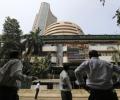
'It is easy to dramatise the events of today, but it is far more important to focus on the fact that we have a radically overvalued financial sector. It is a house of cards.'

In dollar terms, the Indian markets managed to climb back to 2008 levels only in January this year. The subsequent fall in the rupee because of emerging market woes has once again pushed the markets below their 2008 level in dollar terms.

The US market regulator Securities and Exchange Commission was doing what it could to stem the flow. It temporarily prohibited naked short-selling in the securities of major financial players including Freddie Mac and its sister firm Fannie Mae in July. But this didn't really help. It was only after global central banks pumped in unprecedented liquidity into global markets, that the storm was finally calmed.

On the 10th anniversary of the global financial crisis, a multi-part series analyses the lessons learnt and those not learnt.

Sachin P Mampatta goes back in time to recall a deluge that that has passed into lore in Kerala.
 © 2026 Rediff.com - Advertise with us - Disclaimer - Privacy Policy - Sitemap - Feedback - About us - Terms of use - Grievances